What Is Boondocking?
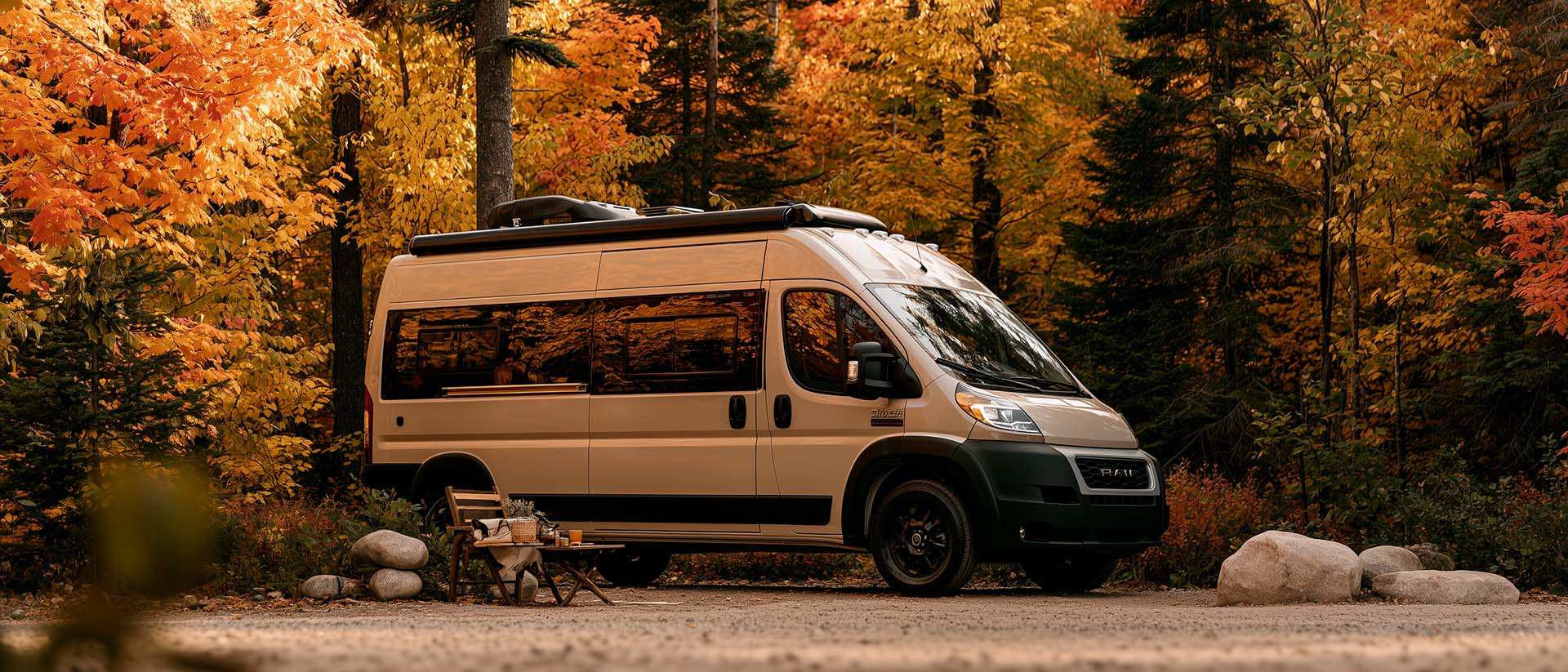


You've seen the word everywhere — on social media, in RV Facebook groups, on our own map — but you're not quite sure what it actually means? Boondocking means camping in an RV, trailer, or camper van completely outside of traditional campgrounds: no electricity, no running water, no sewer — just you, your vehicle, and nature.
Where does this odd word come from?
"Boondocking" comes from boondocks, American slang for a remote, out-of-the-way place. Its origin goes back even further: American soldiers stationed in the Philippines in the early 20th century picked up the Tagalog word bundok, meaning "mountain," to describe the country's remote regions. The term entered American English, then RV vocabulary, to describe setting up camp literally "in the middle of nowhere."
Boondocking, dispersed camping, dry camping: what's the difference?
These terms overlap a lot and are often used interchangeably, but there are useful nuances to know:
- Dry camping: the broadest term. It simply means camping without being hooked up to water, electricity, or sewer — whether at an official campground (on a non-serviced site) or out in nature.
- Dispersed camping: camping for free on public land (Crown land in Canada, BLM land or national forests in the US), outside of any developed site.
- Boondocking: a form of dispersed camping, but accessible by RV — on roads wide enough for a large vehicle, unlike tent-based dispersed camping, which can reach harder-to-access spots on foot or by 4x4.
In practice, on 123Go.Quebec as in most RV communities, all three terms are used interchangeably to describe the same thing: camping fully self-sufficiently, away from traditional campgrounds.
Why go boondocking?
The reasons are as varied as the campers themselves, but a few come up again and again:
- Freedom and spontaneity. No reservations, no fixed schedule — you decide where and when to stop.
- The price. It's free. Over a long season or a big trip, the savings on camping fees add up fast.
- Immersion in nature. Access to views, sunsets, and quiet that developed campgrounds — often crowded in peak season — simply can't offer.
- Escaping the crowds. A boondocking spot is rarely packed, unlike many campgrounds in summer.
Where can you go boondocking?
The most common spots are public lands — Crown land in Canada, BLM land or national forests in the US — as well as certain business parking lots that tolerate an overnight stay for travelers (Walmart and Cracker Barrel being the best-known examples in North America). The 123Go.Quebec map lists thousands of spots already verified by the community, in both Canada and the US — a solid starting point instead of searching blind.
Is it legal?
It depends entirely on the land. Dispersed camping is generally allowed on public land (sometimes with a maximum stay), but prohibited or regulated elsewhere — municipal parks, unauthorized private property, certain rest areas. The golden rule: find out before you settle in, and when in doubt, move on. That's exactly why we wrote our Responsible Camper's Charter of Values: seven simple principles for boondocking without harming the places, the local communities, or the campers who come after you.
Ready to try it? Explore the 123Go.Quebec map to find a first spot near you, and keep the Charter of Values in mind before you head out.